
Handling Difficult In-Laws
How to Handle Difficult In-Laws and Partners’ Extended Family


It is often said that when you marry someone, you also marry their family. While some in-laws become cherished members of your extended family, others can be challenging. Navigating relationships with in-laws and extended family can be one of the trickiest aspects of marriage. While family ties often bring love and connection, they can also create stress, misunderstandings, and boundary issues that test even the strongest relationships. If you’re struggling with challenging in-laws, you’re not alone—and the good news is, there are proven strategies to help.
Drawing on insights from the Gottman Institute and expert relationship advice, this guide will show you how to handle difficult in-laws while prioritizing your marriage, maintaining peace, and setting healthy boundaries. Let’s dive in!

1. Strengthen Your Relationship First
Your marriage or partnership is the foundation of your family. When facing challenges with in-laws, a strong relationship creates the resilience you need to navigate external stress. The Gottman Institute highlights that couples who prioritize their connection are better equipped to handle family-related conflicts.
Pro Tip: Schedule regular check-ins with your partner to discuss in-law dynamics and how you’re feeling. Use open communication to identify challenges and strategize solutions together.
2. Master the Art of Boundary Setting
Healthy boundaries are key to navigating in-law relationships. Without clear boundaries, well-meaning (or not-so-well-meaning) family members may inadvertently overstep. Set limits as a team and communicate them respectfully to maintain harmony.

How to Set Boundaries with In-Laws:
Communicate as a Team: Present a united front when discussing boundaries with in-laws.
Be Respectful but Firm: Use "I" statements to express your needs without assigning blame. For example, “We’d appreciate it if visits could be planned in advance to avoid scheduling conflicts.”
Enforce Consistency: Boundaries only work when upheld. Both partners need to reinforce agreed-upon limits.
3. Practice Empathy and Patience
It’s easy to feel frustrated or hurt when dealing with difficult in-laws, but practicing empathy can help shift the dynamic. Often, in-laws act out of love or concern, even if their behavior feels intrusive. Understanding their perspective can foster a sense of mutual respect.
Tips for Cultivating Empathy:
Learn Their Story: Ask about their experiences, values, and family traditions.
Validate Their Intentions: Acknowledge their efforts even when they don’t align with your preferences.
Stay Calm: When tensions rise, take a moment to breathe and respond thoughtfully.
4. Build Rituals of Connection
Family rituals can bridge gaps and reduce conflict. Whether it’s hosting a regular family dinner, celebrating holidays together, or simply sharing updates about your life, small gestures of connection can build goodwill and strengthen bonds.
Examples of Connection Rituals:
Create a monthly tradition, like Sunday brunch or game night.
Incorporate in-laws into holiday celebrations in a way that respects your own traditions.
Send occasional text updates or photos to show you value their involvement.
5. Use Gottman’s Soft Startup Method for Conflict
When difficult conversations with in-laws arise, starting gently can make all the difference. The Gottman Institute emphasizes using a “soft startup” to address issues without escalating tension.
Soft Startup Example:
Instead of: “Your mom is always interfering with our parenting decisions!”
Try: “I feel overwhelmed when advice is offered without us asking. Can we discuss how to handle this together?”

6. Prioritize Loyalty to Your Partner
One of the biggest mistakes couples make is failing to prioritize their partnership when in-law conflicts arise. Showing loyalty to your spouse reassures them and creates a sense of unity. Here are some ways to demonstrate loyalty:

Avoid taking sides in disputes; instead, address issues as a couple.

Reassure your partner that your commitment to them comes first.

Never criticize your spouse’s family in a way that makes them feel alienated or defensive.
7. Know When to Seek Professional Support

If in-law tensions become too overwhelming or affect your relationship, consider seeking help from a couples therapist. A trained professional can guide you through setting boundaries, improving communication, and resolving deep-seated issues.
Signs You May Need Therapy:
Repeated conflicts about in-laws without resolution.
Significant strain on your marriage due to family interference.
Feelings of resentment or emotional exhaustion.

8. Celebrate Progress in Your Family Relationships
Don’t forget to acknowledge the small wins! Whether it’s a peaceful family gathering or successfully setting a boundary, celebrating progress helps reinforce positive behavior and strengthen your confidence as a couple.
Gratitude Tip: Take time to thank your partner for their teamwork and support in navigating challenging in-law dynamics.
Conclusion: Navigating In-Laws with Grace
Handling difficult in-laws and extended family is no easy task, but it’s entirely possible with the right mindset and strategies. By prioritizing your relationship, setting boundaries, practicing empathy, and seeking support when needed, you can build healthier, more harmonious family dynamics.
Remember, it’s about progress, not perfection. Take each step as an opportunity to strengthen your bond with your partner and create a supportive family environment.
Optimize Your Family Life Today
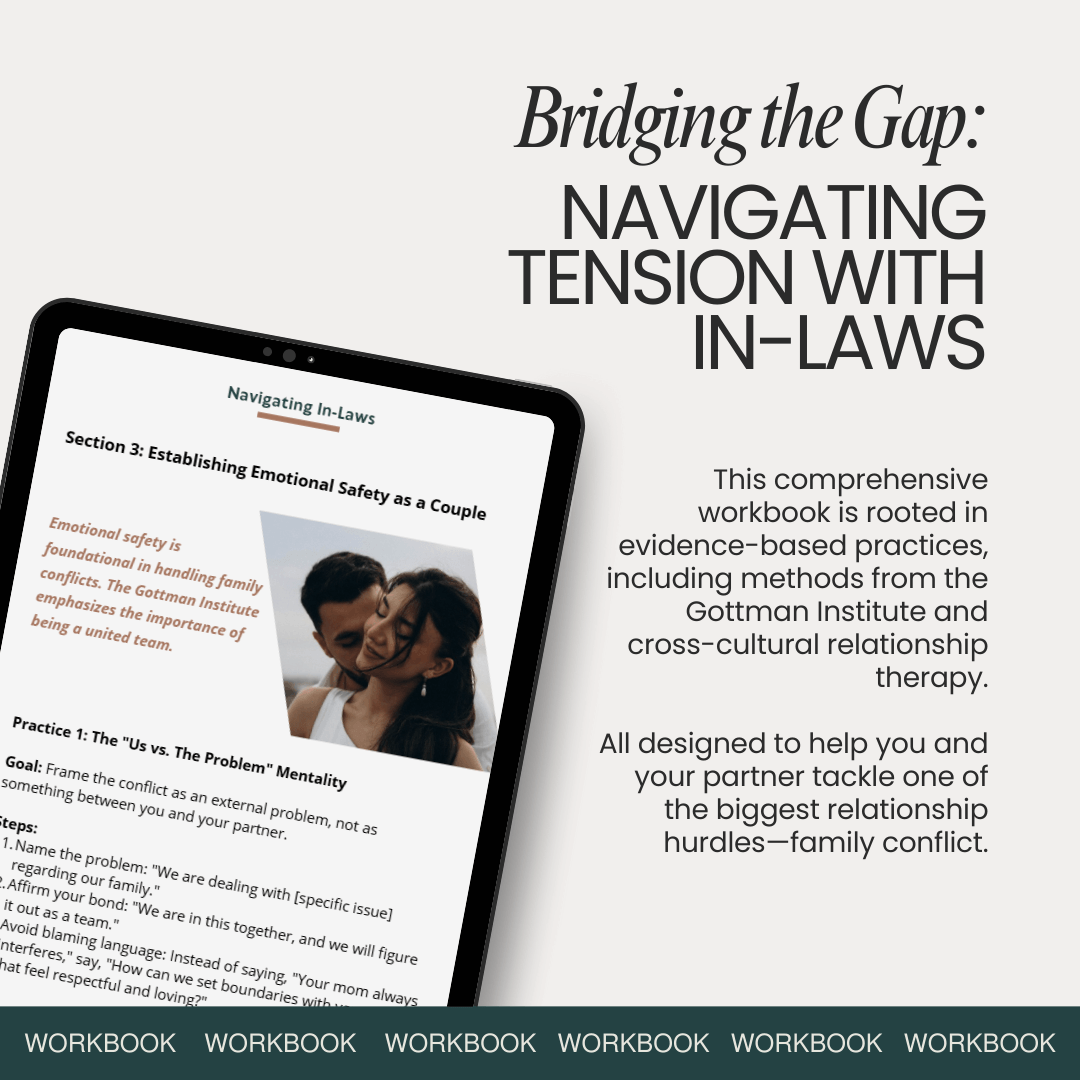
Navigating challenging in-law relationships? Use these expert-backed strategies to transform conflict into connection. Check out our "Navigating In-Laws" Workbook for more relationship tips and tools for building a stronger marriage!
Let us know what you think in the comments!


